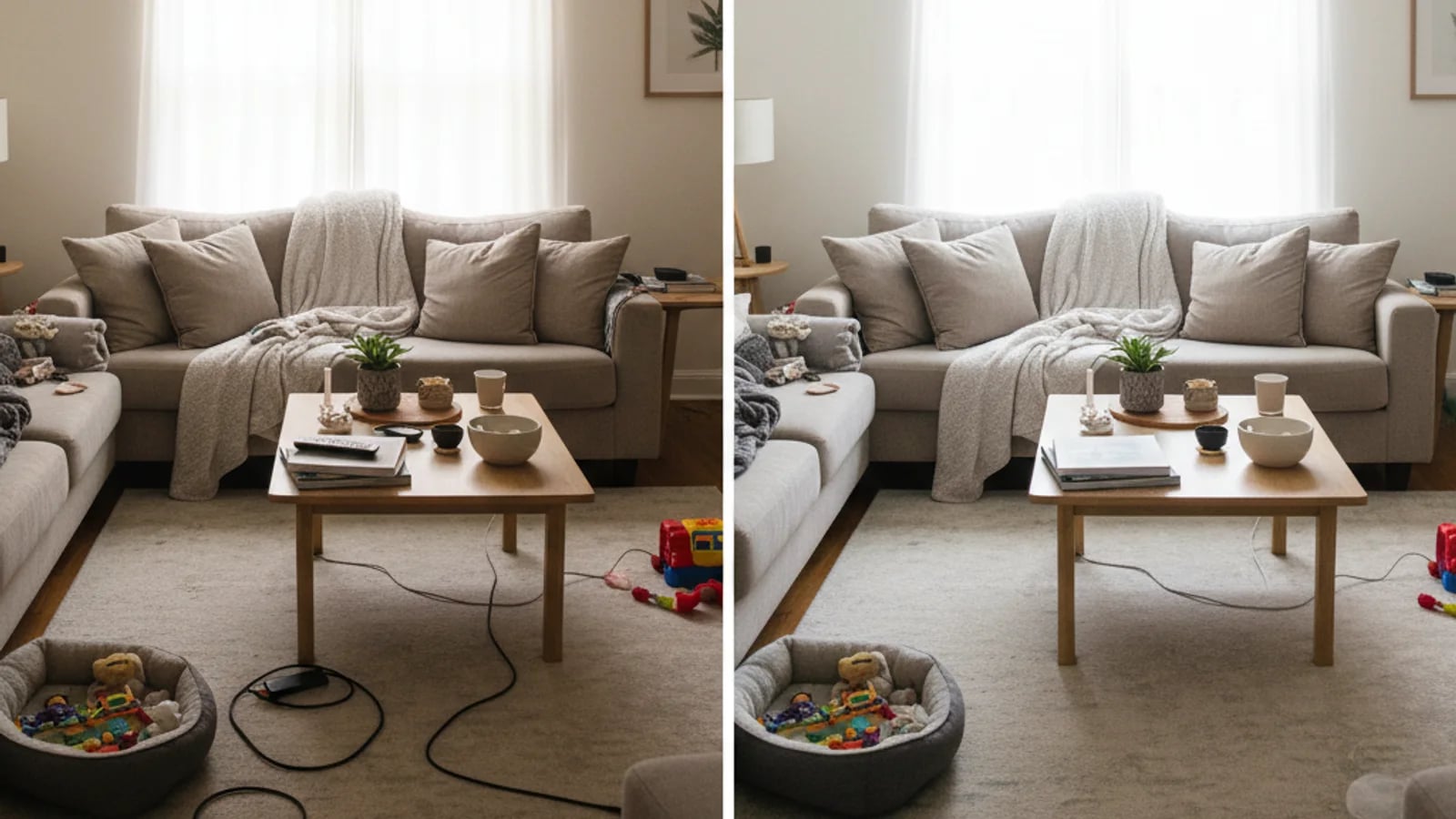
Decluttering is one of the highest-leverage moves in listing photography because clutter blocks readability before buyers even start evaluating the home itself. But not every problem needs the same fix. Some rooms need a physical reset before photography. Others only need digital cleanup after the shoot. Knowing the difference helps agents move faster without weakening trust.

Use physical cleanup when the room itself is not shoot-ready
If the room is buried under laundry, dishes, pet equipment, moving boxes, or highly distracting personal items, physical cleanup should happen before photography whenever possible. The camera still needs clean lines, visible surfaces, and a readable room layout. AI cleanup is strongest when it simplifies a room that is already mostly understandable, not when it tries to rescue chaos.
For occupied homes that need a cleaner launch without full staging, start with a practical prep workflow like this occupied-home checklist before deciding what should be removed digitally.
Use digital decluttering when the room is marketable but visually noisy
Digital item removal works best when the room is structurally fine but the photo contains too many small distractions: wires, countertop appliances, pet beds, bins, extra chairs, toys, or mismatched temporary furniture. Those are often the details that make the room feel smaller or lower-value online even though the space itself is not the problem.
That is where furniture removal becomes a strong listing tool. It simplifies the image so buyers can understand the room faster without turning the home into something unrecognizable.
The goal is clarity, not visual fiction
Digital decluttering should make the room easier to read, not hide meaningful property issues. If a room has visible damage, awkward layout constraints, or permanent fixtures that affect usability, those should not disappear simply because the edit looks cleaner. The safest standard is simple: remove noise, not truth.
If the cleanup changes how the room is materially understood, the edit is too aggressive. That same principle also applies to broader photo editing boundaries, especially where local portal or MLS standards matter.
Decluttering works best as part of a launch sequence
The strongest sequence is usually: prep the room, capture the photo, declutter digitally where needed, then brighten and polish the frame if necessary. In weaker light, follow decluttering with AI photo enhancement so the image feels cleaner and brighter together rather than simply emptier.
That combined workflow is often more valuable than staging because it preserves the real room while improving its readability and perceived care level.
Sources and further reading
Frequently asked questions
When is AI item removal better than physical decluttering?+
It works best when the room is already marketable and only small distractions are getting in the way, such as cords, countertop clutter, bins, or a few visually noisy objects.
Can digital decluttering replace prepping the home?+
Not fully. If the room is too messy or unreadable before the shoot, physical prep should still come first because the camera needs a usable base image.
What should never be removed digitally?+
Anything that changes the real understanding of the property, including important defects, permanent constraints, or features buyers should know about before visiting.
Topics covered in this guide
AI item removal real estate, digital decluttering for listing photos, real estate photo declutter, remove clutter from property photos, AI furniture removal real estate.