
Real estate photo editing is supposed to improve clarity, not rewrite the property. That sounds obvious, but the boundary gets blurry fast once teams start mixing enhancement, item removal, virtual staging, sky work, and renovation previews into the same media workflow. The safest rule is to ask whether the edit helps the buyer understand the home better or encourages them to misunderstand it.
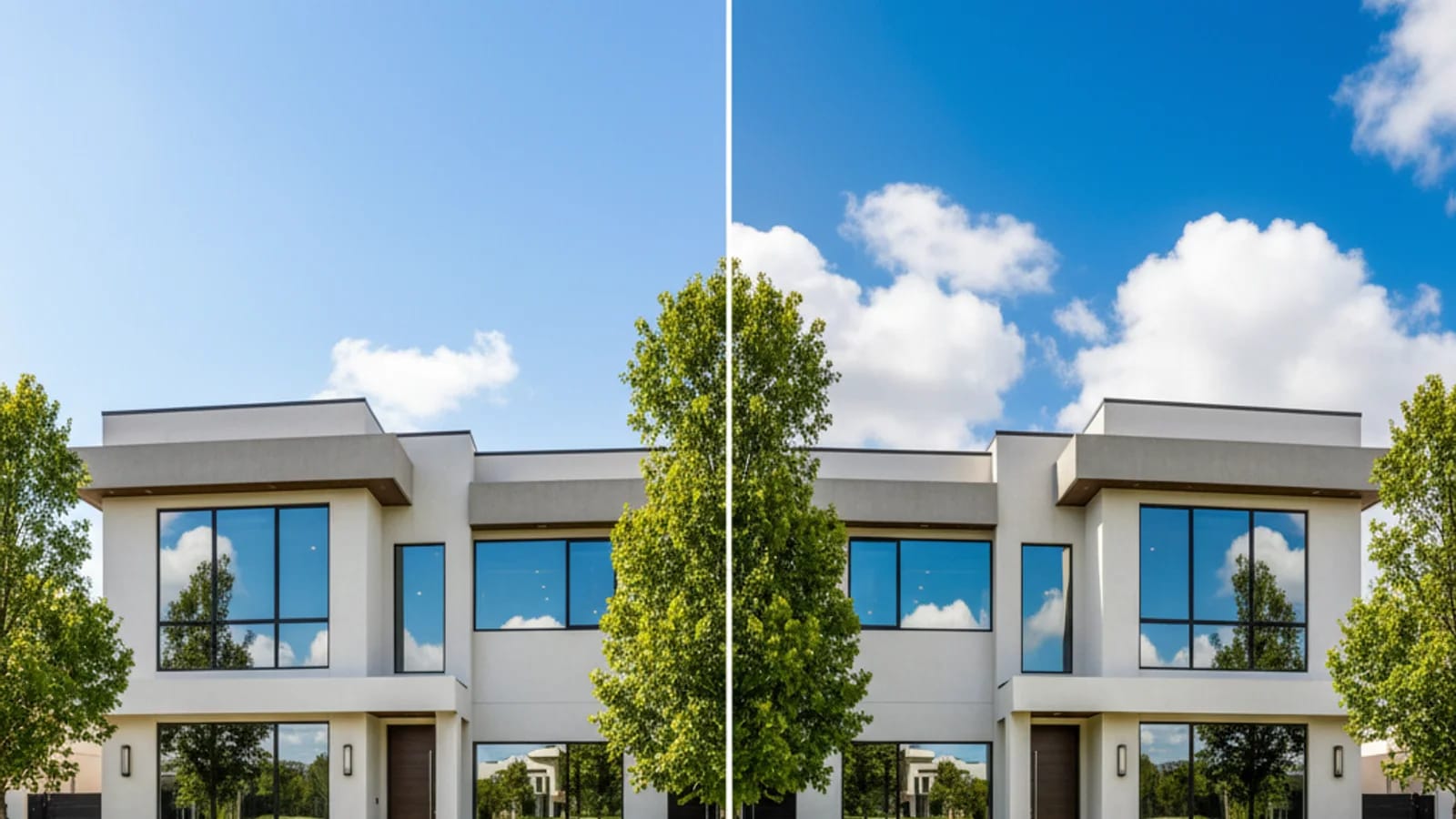
Most safe edits improve readability, not reality
Exposure balancing, white-balance correction, perspective cleanup, minor lawn cleanup, and general brightening are typically safe because they make the property easier to read without changing what it is. The same goes for selective decluttering when the goal is to remove distraction rather than hide a material issue.
Tools like AI photo enhancement and exterior retouching are strongest when they clarify the existing home rather than transform it into a different one.
Edits become risky when they hide decision-relevant facts
The line is crossed when an edit removes or changes something a buyer would reasonably want to know before visiting. That includes meaningful damage, permanent obstructions, problematic sight lines, or structural realities that affect room function. If the edit changes how the home is materially perceived, trust weakens and compliance risk rises.
This is especially important with virtual staging and digital decluttering, where tasteful use can help and aggressive use can mislead.
Label altered imagery when the context calls for it
Some markets, portals, or MLS environments expect stronger labeling around altered images, especially for virtually staged visuals. Even where explicit platform rules are lighter, buyer trust still improves when altered imagery is handled clearly and consistently. That is why a workflow matters more than one isolated edit.
For staging-specific questions, pair this article with our virtual staging disclosure guide so the team has a simple publication standard.
Build an internal standard before the busy season starts
The best teams do not evaluate every edit from scratch. They define what counts as acceptable enhancement, acceptable cleanup, acceptable staging, and unacceptable alteration. That protects consistency across agents, freelancers, and photographers.
If you already have a repeatable production process such as an AI-assisted editing workflow, codifying these boundaries becomes much easier because the team is not improvising under deadline pressure.
Sources and further reading
Frequently asked questions
Is brightness correction usually acceptable in listing photos?+
Yes, as long as the edit improves readability without changing what the home materially looks like. The goal is clarity, not fabrication.
What kind of edits are most risky?+
Edits that hide meaningful defects, permanent constraints, or other decision-relevant facts are the riskiest because they can change how a buyer understands the property.
Should virtually staged images be treated differently?+
Yes. Because they introduce imagined furnishings, they deserve a clearer publication workflow and, where relevant, disclosure or labeling that protects trust.
Topics covered in this guide
real estate photo editing rules, what can you edit in listing photos, real estate photo compliance, property photo editing ethics, listing image disclosure rules.