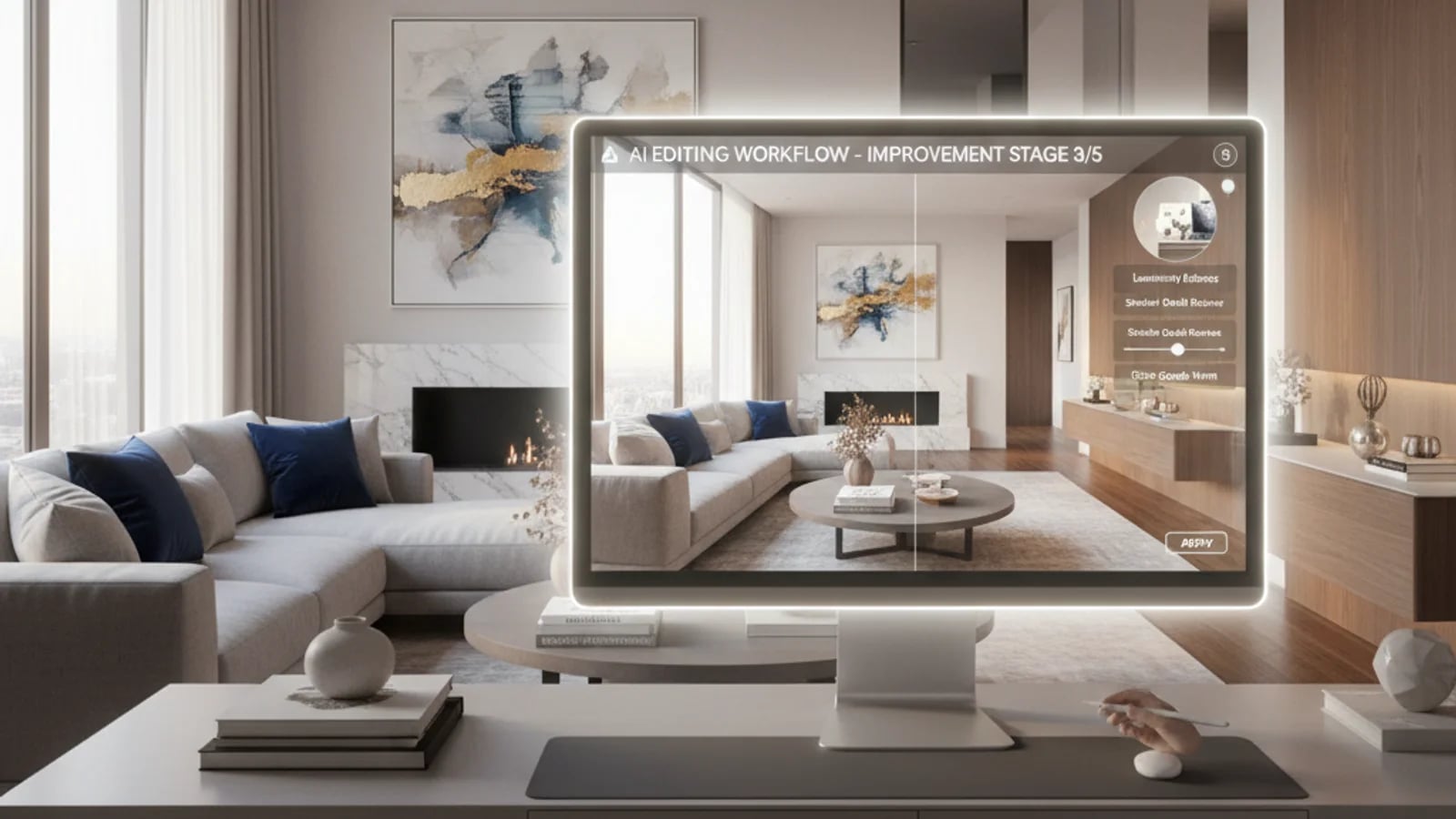
Listing photography is, dollar for dollar, the highest-return marketing investment a real estate agent can make. Professional photos increase listing views, shorten days on market, and in many cases measurably increase sale price. Yet the gap between an average listing photo and an exceptional one is wide — and it is not just about equipment. It is about understanding how buyers consume listing images, knowing which rooms matter most, and having a post-processing workflow that consistently produces portal-ready output. This guide covers the full picture.
Why listing photography is the highest-ROI marketing spend
Multiple studies across MLS platforms, portals, and brokerage data have reached the same conclusion: listings with professional photography sell faster and for more money than those without. The mechanism is straightforward — better photos generate more online views, more views generate more showings, and more showings generate more offers. Every step in that funnel is amplified by photo quality.
The cost of professional photography for a typical listing ($150-400) is trivial compared to the potential impact on sale price. Even a 1% improvement in sale price on a $400,000 home is $4,000 — a 10x return on the photography investment. And that is before considering the time savings from faster sales and the compounding effect of a stronger portfolio for winning future listings.
The rooms that matter most (and how to shoot them)
Not all rooms are equal in buyer decision-making. The kitchen, primary living area, primary bedroom, and exterior front shot are the four highest-impact images in any listing. These four photos should receive the most attention in terms of preparation, lighting, and composition.
Kitchen: Shoot from the entrance, ideally showing the relationship to adjacent dining or living space. Clear all countertops. Turn on under-cabinet lighting if available. Use a tripod and shoot at counter-height for a natural perspective.
Primary living area: Shoot from the farthest corner that captures the room's full depth. Stage seating to face the camera or at a slight angle, never away. Include a window in frame if possible — natural light is a selling point.
Primary bedroom: Shoot from the doorway or corner opposite the bed. The bed should be made with neutral linens, and personal items should be removed. A bedroom that looks like a hotel room photographs better than one that looks lived-in.
Exterior front: This is often the lead image and the first thing buyers see in search results. Shoot at twilight or on a bright but overcast day for the most flattering light. Ensure the lawn is trimmed, the driveway is clear, and no vehicles are in frame.
The modern post-processing stack
The days of manually editing every listing photo in Lightroom are over for high-volume agents and teams. AI post-processing now handles the repetitive, technical corrections — exposure, white balance, vertical alignment, lens distortion — in seconds rather than hours. The photographer or editor's time is freed for the creative decisions that AI cannot make: which images to include, how to sequence them, and whether a particular enhancement crosses the line from presentation to misrepresentation.
A modern post-processing stack typically includes: batch AI enhancement for technical corrections, selective manual retouching for hero shots, virtual staging for empty rooms, and — for exterior shots — sky replacement and day-to-dusk conversion. See our individual guides on AI photo enhancement and twilight editing for deeper dives into each step.
Workflow efficiency: from shoot to portal in hours
Speed matters in listing photography. A photo set that takes three days to deliver may miss the peak showing window entirely. The most efficient workflows combine in-camera discipline (shoot it right the first time) with AI post-processing to compress the edit-to-delivery timeline.
A realistic high-efficiency workflow: shoot in the morning, upload RAWs to the AI processing queue, receive corrected images by early afternoon, apply selective manual edits and staging to hero shots, and deliver the complete set by end of day. This same-day turnaround is achievable for most properties when the process is systematised.
Photography as a listing-winning asset
Your listing photography portfolio is your most powerful listing presentation tool. When a potential seller evaluates agents, they look at current listings — and the visual quality of those listings shapes their perception of the agent's professionalism and market knowledge. Investing in consistently excellent photography is not just about selling the current listing faster; it is about winning the next five listings.
Frequently Asked Questions
How much does professional real estate photography cost?+
Professional real estate photography typically costs $150-400 for a standard listing photo package (25-40 photos). Add-on services like drone aerials ($100-250), virtual tours ($200-500), and twilight shoots ($50-150 per image) increase the total. For agents shooting regularly, volume arrangements with photographers can bring per-listing costs down.
What makes a good real estate photo?+
A good real estate photo is sharp, well-lit, properly composed (vertical lines are actually vertical), and shows the room at its best without misrepresenting it. The photo should give buyers an accurate sense of the space's size, layout, and light quality. Technical correctness is the baseline; the difference between good and great is composition, lighting control, and attention to detail in room preparation.
Should I hire a professional photographer or shoot myself?+
For listings where photography quality directly impacts sale price (virtually all properties above entry level), a professional photographer delivers consistently better results and a more efficient workflow. The cost is typically recovered many times over in faster sale time and higher sale price. For very low-price-point listings or rental properties in markets where professional photography is not the norm, DIY with AI enhancement can be a viable bridge.