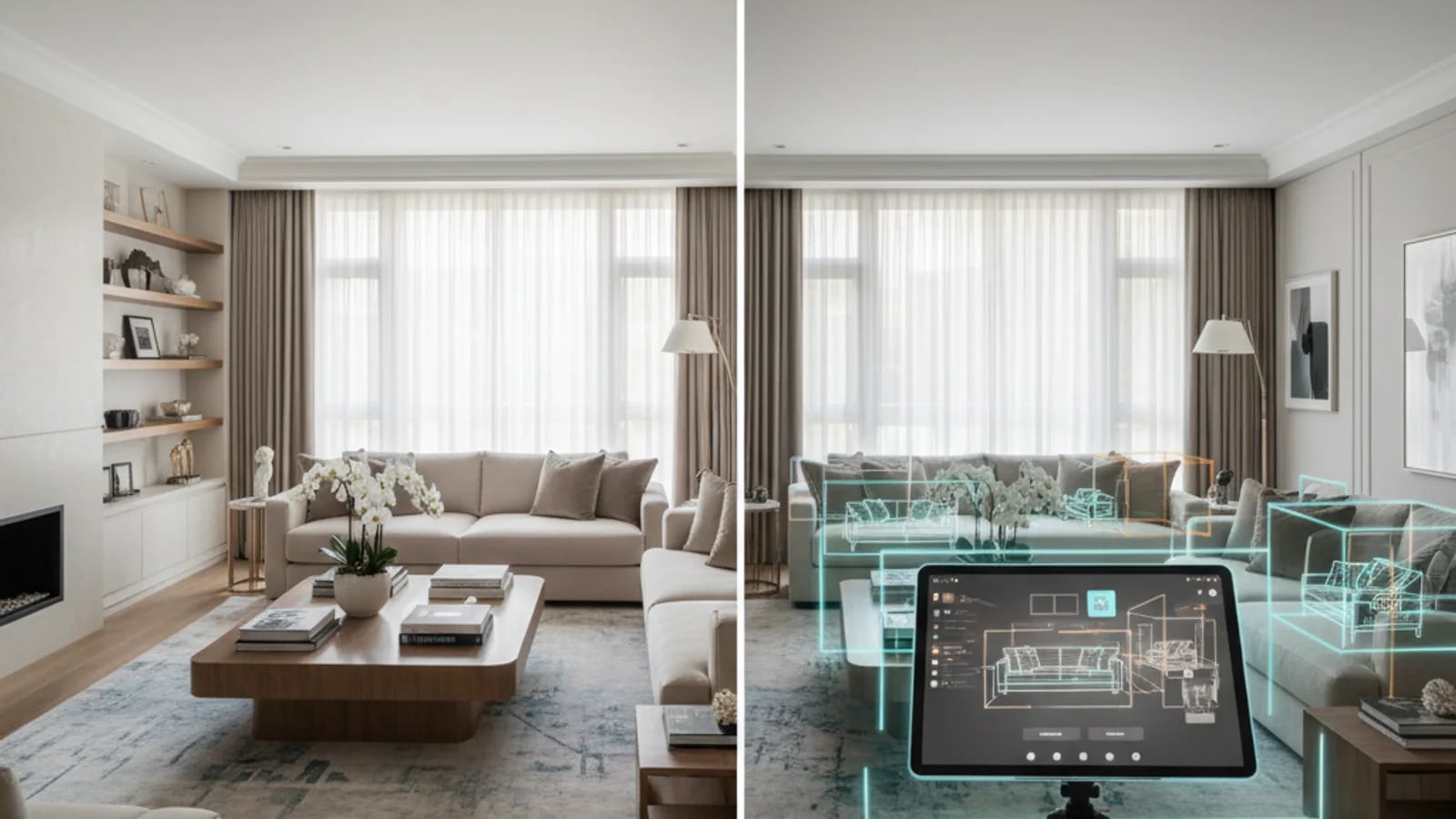
Virtual staging and physical staging are often framed as direct substitutes, but they serve slightly different jobs. Physical staging changes the in-person experience of the home. Virtual staging changes the digital-first experience of the listing. Sometimes those goals overlap. Often they do not. The right choice depends on where the listing needs help most: online attention, showing experience, or both.

Physical staging owns the in-person experience
When buyers are walking through the home, physical staging has an obvious advantage. It shapes scale, atmosphere, and flow in the real space. That matters for high-touch luxury showings or homes where the seller is already committed to a premium presentation standard.
But physical staging also brings cost, logistics, and time. Recent explainers from HomeLight and HomeAdvisor show how quickly multi-room staging moves into the thousands once furniture rental, delivery, and installation enter the process.
Virtual staging owns the first impression online
Virtual staging wins when the challenge is digital presentation. It gives empty rooms a stronger emotional hook in the listing gallery, the portal feed, the pitch deck, and even the slideshow cover. That is especially useful in a market where the first viewing often happens on a phone long before a buyer schedules a tour.
Because providers like BoxBrownie and Styldod price virtual staging per image, the spend can stay tightly focused on the few images that matter most.
The best choice usually depends on inventory type
Vacant new inventory, investor listings, and empty resale apartments often get more immediate value from virtual staging because the listing problem is mainly digital imagination. High-end owner-occupied homes, luxury open-house campaigns, and design-led properties may still justify physical staging where the in-person showing experience is central.
There is also a hybrid route: use virtual staging to improve launch media immediately, then decide whether physical staging is necessary once market response is clearer. That lets agents preserve budget flexibility instead of front-loading every listing with the heaviest production option.
The ROI lens is different for each
Physical staging can influence how a showing feels. Virtual staging can influence whether the showing happens. That difference matters. A listing that never earns the click or the inquiry cannot benefit from the in-person experience later. In that sense, virtual staging often improves top-of-funnel efficiency, while physical staging can improve conversion deeper in the process.
The smartest agents therefore stop asking which method is universally better. They ask which part of the funnel is underperforming and stage for that problem.
Sources and further reading
Frequently asked questions
Which is better for vacant homes: physical or virtual staging?+
Virtual staging is often the more efficient first move for vacant homes because the biggest problem is usually online imagination rather than in-person furnishing.
When is physical staging still worth the premium cost?+
It is most justified when the in-person showing experience is central to the strategy, especially for premium listings and high-touch luxury presentations.
Can agents use both?+
Yes. A hybrid strategy often makes sense: launch with virtual staging for speed, then use selective physical staging if the listing or client experience demands it.
Topics covered in this guide
virtual staging vs physical staging, digital staging vs traditional staging, staging cost comparison, real estate staging ROI, when to use virtual staging.