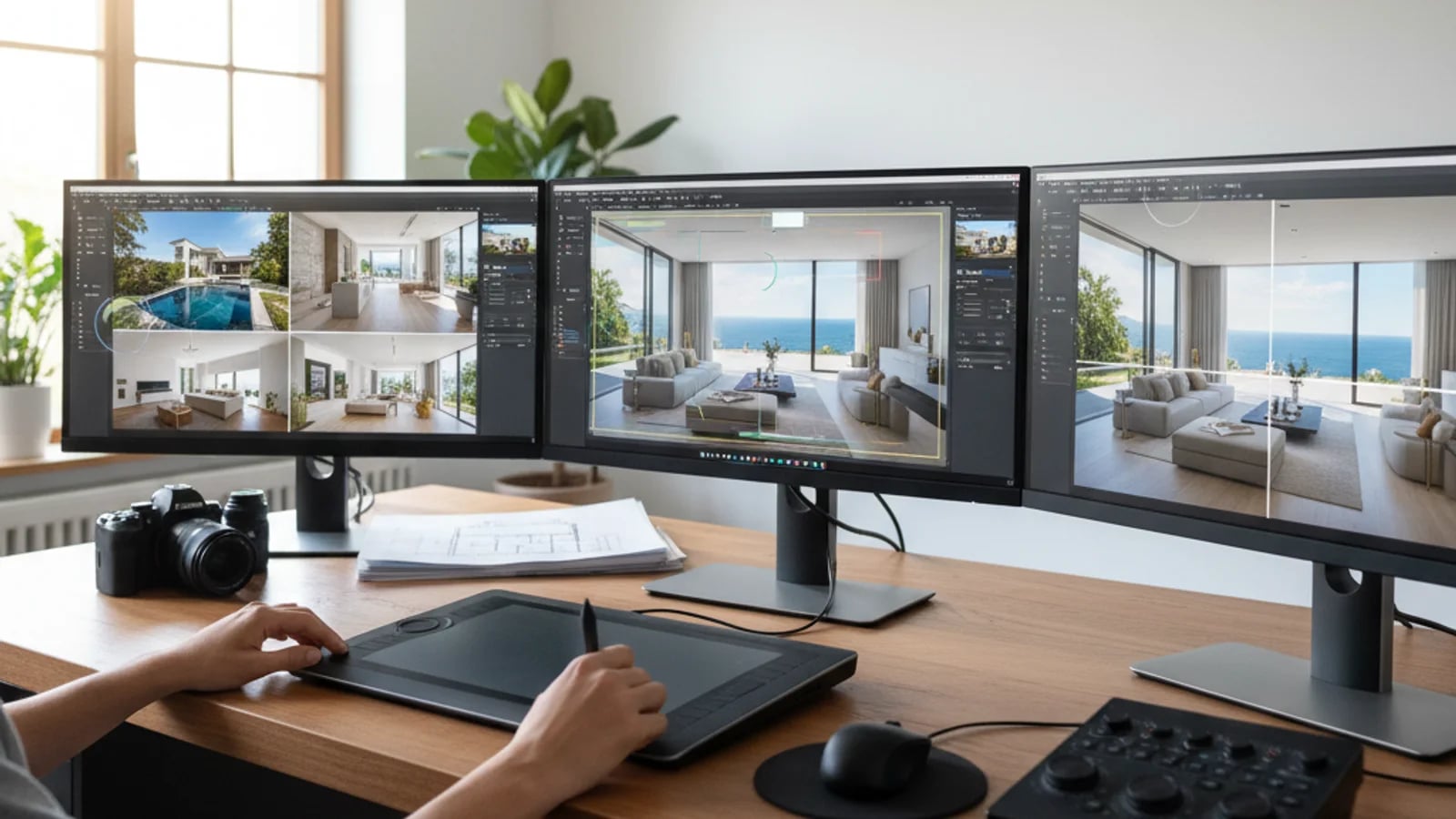
Real estate photographers do not win by adding more software. They win by reducing friction between shoot, edit, review, and delivery. AI becomes valuable when it compresses the repetitive parts of that workflow while leaving human judgment on realism, sequencing, and client expectations intact. The goal is not fake-looking speed. It is dependable speed.

Use AI for repeatable cleanup, not for outsourcing taste
The most valuable AI moves in property photography are usually the repetitive ones: exposure balancing, decluttering, sky cleanup, basic retouching, and selected staging support. Those tasks slow teams down when handled one image at a time, but they still benefit from clear human standards.
That is why a good AI workflow starts with defined rules: what counts as acceptable enhancement, what counts as acceptable cleanup, and what gets escalated for manual review.
Build the pipeline around the strongest order of operations
For many teams, the most efficient sequence is: cull the gallery, select the hero frames, run general polish on the keepers, then apply targeted edits only where needed. In practice that often means AI enhancement first, followed by item removal, then selective virtual staging or exterior work on hero images.
That order keeps the team from spending time on low-value frames and improves consistency across the whole delivery set.
Quality control should happen at the end of every batch
Speed breaks down when teams skip review. A fast workflow still needs a final pass for perspective, realism, color drift, window logic, and anything that pushes the image beyond believable listing polish. That review is where the photographer protects trust and protects the brand.
If your team needs a simple policy baseline, pair the workflow with clear editing rules so reviewers are not making standards up each time.
The real gain is operational, not just visual
Photographers often think of AI as an image-quality tool first. In practice, its bigger value is operational. Faster turnarounds, more consistent output, easier batching, and cleaner handoff to agents all create leverage. Those gains matter even more when the same listing media must later feed seller decks, portal uploads, and video derivatives.
Once the workflow is stable, AI stops feeling like a novelty and starts acting like production infrastructure.
Sources and further reading
Frequently asked questions
What is the safest role for AI in a photography workflow?+
AI is safest when it handles repeatable cleanup and polishing tasks while the photographer keeps control over realism, framing decisions, and final review.
Should photographers run every image through the full AI stack?+
Usually no. It is more efficient to cull first, then reserve targeted edits for the frames that matter most to the listing story.
How do photographers keep AI output from looking fake?+
By setting clear editing standards, reviewing every batch, and treating AI as a speed layer rather than a substitute for judgment.
Topics covered in this guide
AI workflow for real estate photographers, real estate photo editing workflow, AI real estate photography editing, batch photo workflow for property photographers, faster real estate photo turnaround.