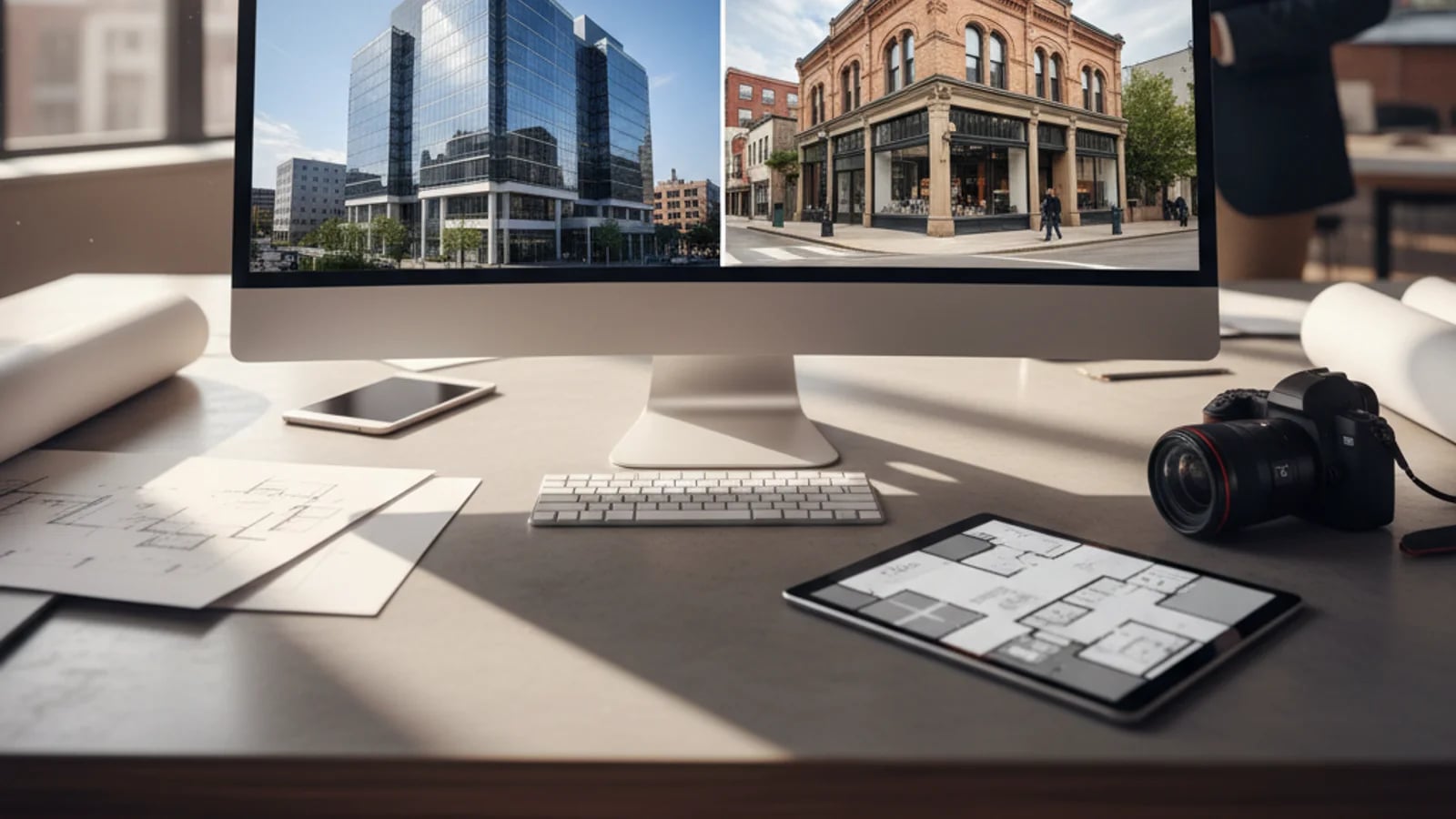
Commercial buyers and tenants scan listings differently from residential buyers. They are not just reacting to mood. They are looking for frontage, visibility, access, condition, circulation, and business fit. That means commercial photography has to explain function quickly while still making the asset feel competitive. A clear checklist helps photographers and brokers capture the right images instead of simply capturing more images.

Start with the images that explain the asset fastest
For many commercial listings, that means frontage first. Can the viewer understand access, signage potential, curb presence, and surrounding context immediately? Then move into the images that explain the operational value of the space: lobby, main floor, circulation, back-of-house, and any feature areas that shape tenant fit.
Unlike residential marketing, the strongest hero image is not always the prettiest one. It is the one that communicates the commercial proposition fastest.
Document layout logic, not just individual corners
Office and retail viewers need to understand how the space works. That means wide frames that show depth, access points, adjacency, and usable floor area. Tight detail shots have a place, but they should support the story, not replace it.
If the interior still reads weakly after capture, a pass through AI photo enhancement can improve clarity without changing the underlying structure of the space.
Context shots matter more in commercial than many teams expect
Nearby anchors, pedestrian flow, parking, major roads, and surrounding tenant mix often influence inquiry quality. A retail unit does not exist in isolation. Neither does an office asset in a business district. Context imagery helps the viewer understand not just the shell, but the asset’s market position.
That context becomes even more valuable when reused in decks, brochures, and follow-up materials for active prospects.
Build the gallery for qualification, not just attraction
A commercial gallery should still look polished, but its deeper job is to help the right leads self-identify. Strong media filters as much as it attracts. That is why clarity usually beats drama. If a listing needs more imagination support, use commercial virtual staging selectively on top of a clear photographic base.
The better the gallery explains frontage, floor logic, and context, the more useful the inquiries tend to become.
Sources and further reading
Frequently asked questions
What should come first in a commercial listing gallery?+
Usually the image that explains the asset fastest, often the frontage or the most legible overall space shot rather than the most decorative frame.
Are neighborhood and access shots worth including?+
Yes. For many office and retail listings, surrounding context is part of the asset value and helps qualify leads more effectively.
Should commercial photography be more factual than residential photography?+
Generally yes. It still needs polish, but the priority is often business clarity and asset understanding rather than pure lifestyle emotion.
Topics covered in this guide
commercial real estate photography checklist, office listing photography, retail property photography tips, commercial listing photo guide, mixed use property photography.