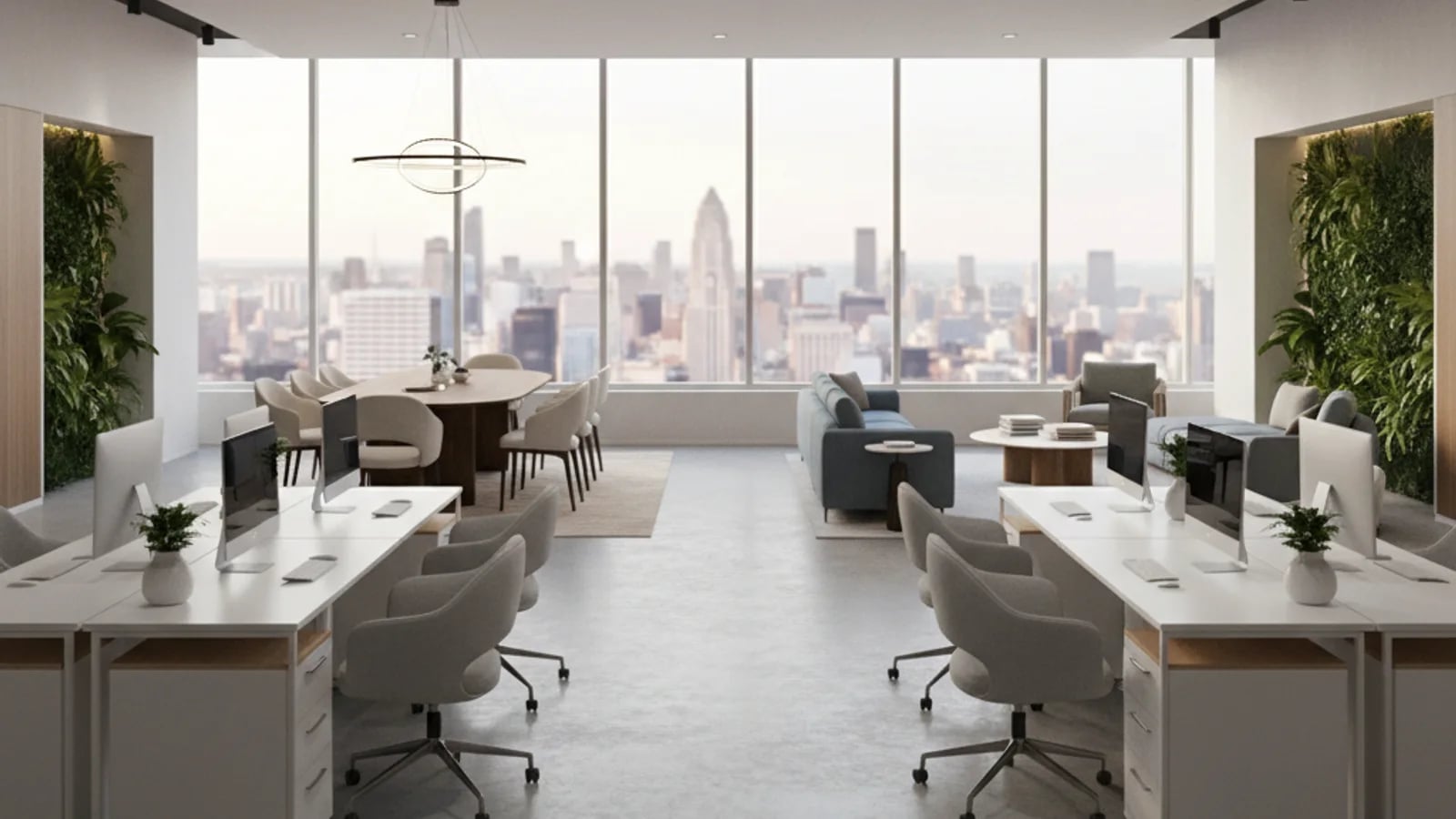
Commercial listings often fail for the same reason many residential listings fail: buyers or tenants cannot read the space quickly enough online. But commercial staging serves a slightly different purpose. It is less about emotional décor and more about use-case clarity. The job is to show how the floor can work, where activity happens, and what kind of business or tenancy fits the space.

Commercial staging is about function before mood
In office, retail, and mixed-use marketing, the strongest staged image answers practical questions. Can this floor hold open workstations? Does the frontage support merchandising? Is there enough circulation around seating or service zones? Those signals matter more than decorative richness because the viewer is usually evaluating business fit rather than lifestyle aspiration.
That is why commercial staging should feel restrained. It should explain a realistic use case, not bury the asset under generic décor.
Office, retail, and mixed-use each need different visual logic
An empty office suite benefits from layout cues such as workstations, collaboration zones, and meeting rooms. Retail space needs frontage logic, display rhythm, and customer movement cues. Mixed-use assets often need the image sequence to show both the ground-floor commercial identity and the broader asset context.
The best workflow therefore starts by identifying the likely tenant or buyer profile and matching the staged scene to that use. If the shell still looks visually weak, combine staging with AI photo enhancement or exterior retouching so the asset reads more clearly at first click.
Believability matters even more in commercial marketing
Overstaged commercial imagery can hurt trust quickly because experienced viewers are often scanning for practical constraints: column spacing, frontage width, sight lines, light levels, and floor depth. If the staging ignores those realities, the image stops helping. The safest approach is to stage for comprehension, not fantasy.
A useful internal rule is to keep one or two staged frames alongside several clean original frames. That balance helps the audience understand both the operational possibility and the actual shell condition.
The best staged frame should support leasing and sales collateral too
Commercial staging becomes more valuable when it travels beyond the listing page. A strong staged hero image can anchor a leasing brochure, broker email, deck, social teaser, or slideshow asset. That reuse is often where the ROI really appears.
For outdated interiors, pairing this workflow with virtual renovation planning can also help brokers show both current use and repositioning potential without a physical build-out.
Sources and further reading
Frequently asked questions
Does commercial virtual staging work the same way as residential staging?+
Not exactly. Commercial staging is usually more functional and layout-led. It is meant to clarify use case and tenant fit more than to create a decorative lifestyle scene.
What types of commercial spaces benefit most from staging?+
Vacant office suites, empty retail spaces, and mixed-use properties are strong candidates because staging helps viewers understand layout and business potential much faster.
Should commercial listings stage every image?+
Usually no. One or two strong staged frames paired with clear original images is often the safest and most effective mix.
Topics covered in this guide
commercial real estate virtual staging, office virtual staging, retail virtual staging, mixed use property staging, virtual staging for commercial listings.