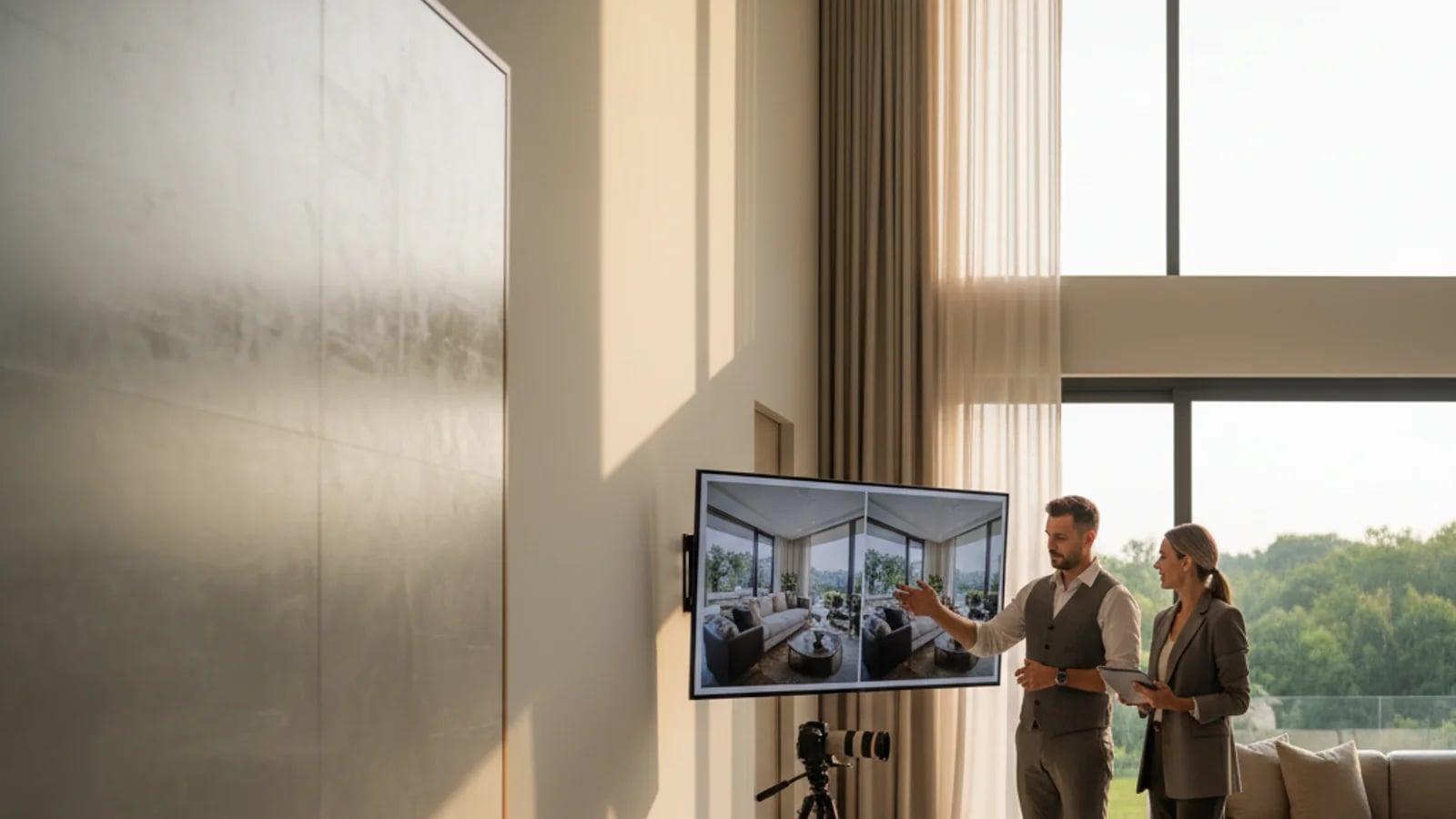
In the UK, the listing photo set usually has to win before the viewing ever happens. Buyers and tenants scan portals quickly, compare multiple homes in the same postcode, and make a first judgment from a handful of frames. That means the gallery cannot simply document the property. It has to explain the property fast. On Rightmove and Zoopla especially, the lead image, the brightness of the interior work, and the order of the room sequence all shape whether someone clicks through or keeps scrolling.
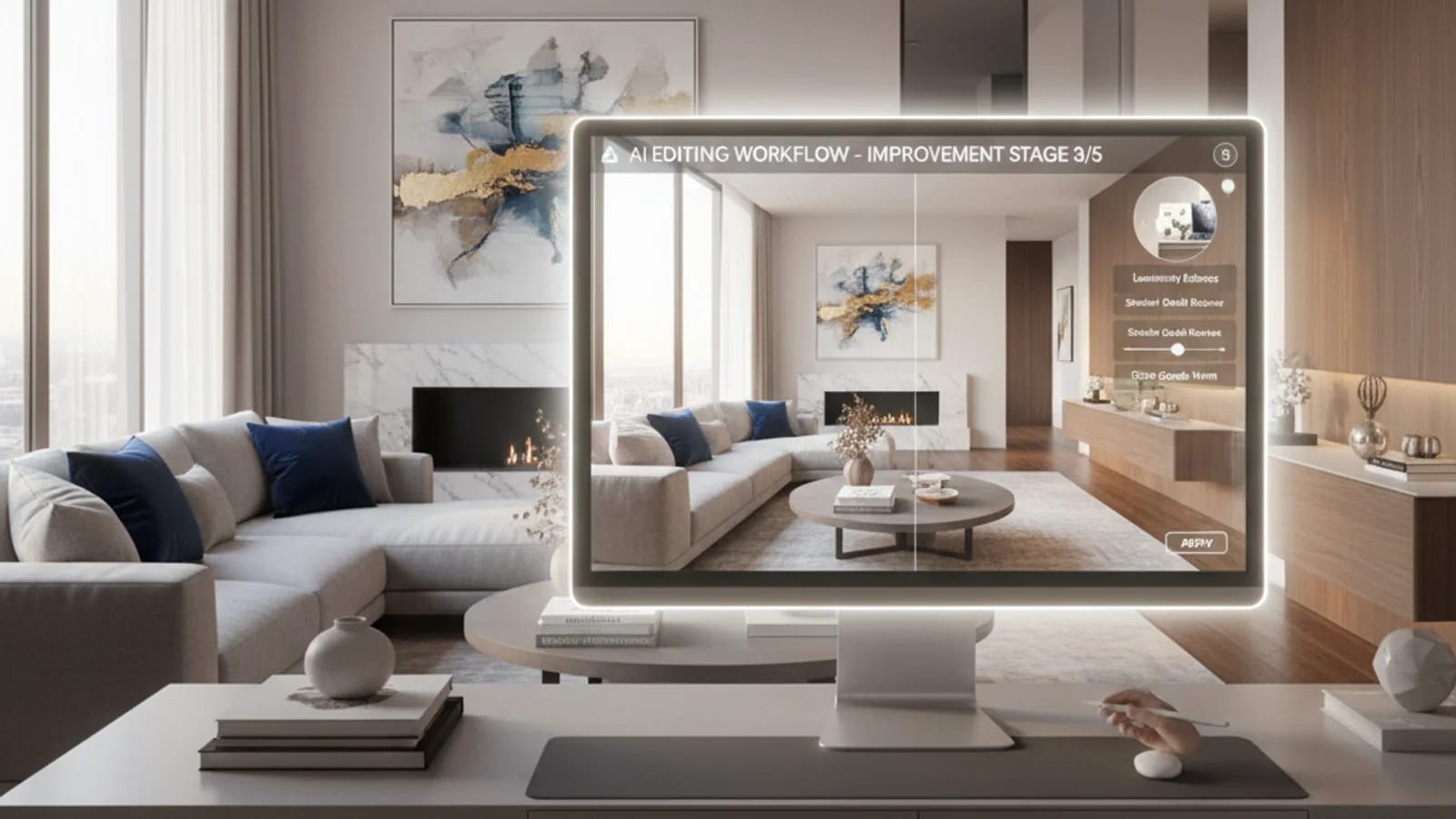
UK portal traffic rewards immediate clarity
Rightmove presents itself as the UK’s largest choice of homes, while Zoopla positions search, comparison, and valuation tools right next to the listing journey. That matters because buyers are not studying a gallery in isolation. They are comparing one listing against many nearby options in the same feed.
The first image therefore needs to answer a simple question quickly: what kind of home is this, and why should I care enough to open it? A muddier “somewhere in the middle of the gallery” photo usually underperforms a clean hero frame that communicates house type, condition, and light immediately.
Pick the cover frame based on the stock type, not a generic rule
A Victorian terrace, a compact city flat, a country home, and a new-build semi do not need the same lead image. For many UK houses, the exterior is still the cleanest first frame because it anchors the street presence and gives buyers instant context. But for weaker facades or apartment stock, the right first image may be the brightest living area or kitchen if that room is what creates desire fastest.
The better question is not “Should I always lead with the exterior?” It is “Which single image best communicates value in this postcode and price bracket?” That framing produces better portal choices and also helps determine whether to use exterior retouching or AI photo enhancement before upload.
Edit for British light without making the home feel synthetic
UK listing photography often has to work around greyer daylight, tighter street spacing, and interiors that can feel dim even when the home itself is attractive. That makes editing important, but it does not justify unnatural results. Over-whitened walls, electric blue skies, and exaggerated saturation usually weaken trust instead of raising perceived quality.
The strongest edits keep brick, timber, paint, and garden tones believable while opening the shadows enough for buyers to understand the space. A clean, credible brightening pass usually does more for portal performance than a dramatic treatment that feels detached from the real house.
Sequence the gallery like a short viewing, not a camera roll
The gallery should help a buyer feel oriented in under a minute. For many UK listings, that means: hero frame, best reception space, kitchen, primary bedroom, bathroom, then supporting rooms and outdoor areas. If the home has a garden office, terrace, period detail, or strong curb appeal, bring those strengths forward rather than burying them near the end.
This sequencing matters just as much as the individual frames. Buyers do not only judge image quality. They judge how easy the listing is to understand. If you want the room set to become more than static media later, the same ordered gallery can also feed AI video slideshows with much less manual work.
Sources and further reading
Frequently asked questions
Should UK estate agents always use the exterior as the first image?+
Not always. The first image should be the frame that communicates value fastest. For many houses that is the exterior, but for some flats and weaker facades the best first image may be the main reception room or kitchen.
How bright should UK listing photos be?+
Bright enough to make the space readable and inviting, but still believable. The goal is clarity and confidence, not an over-processed or artificial finish.
Does gallery order affect portal performance?+
Yes. Buyers make fast judgments, so a well-ordered gallery helps them understand the home more quickly and keeps strong selling points from getting buried.
Topics covered in this guide
Rightmove listing photo guide, Zoopla listing photo guide, UK estate agent listing photos, property photography for Rightmove, UK property portal photo tips.