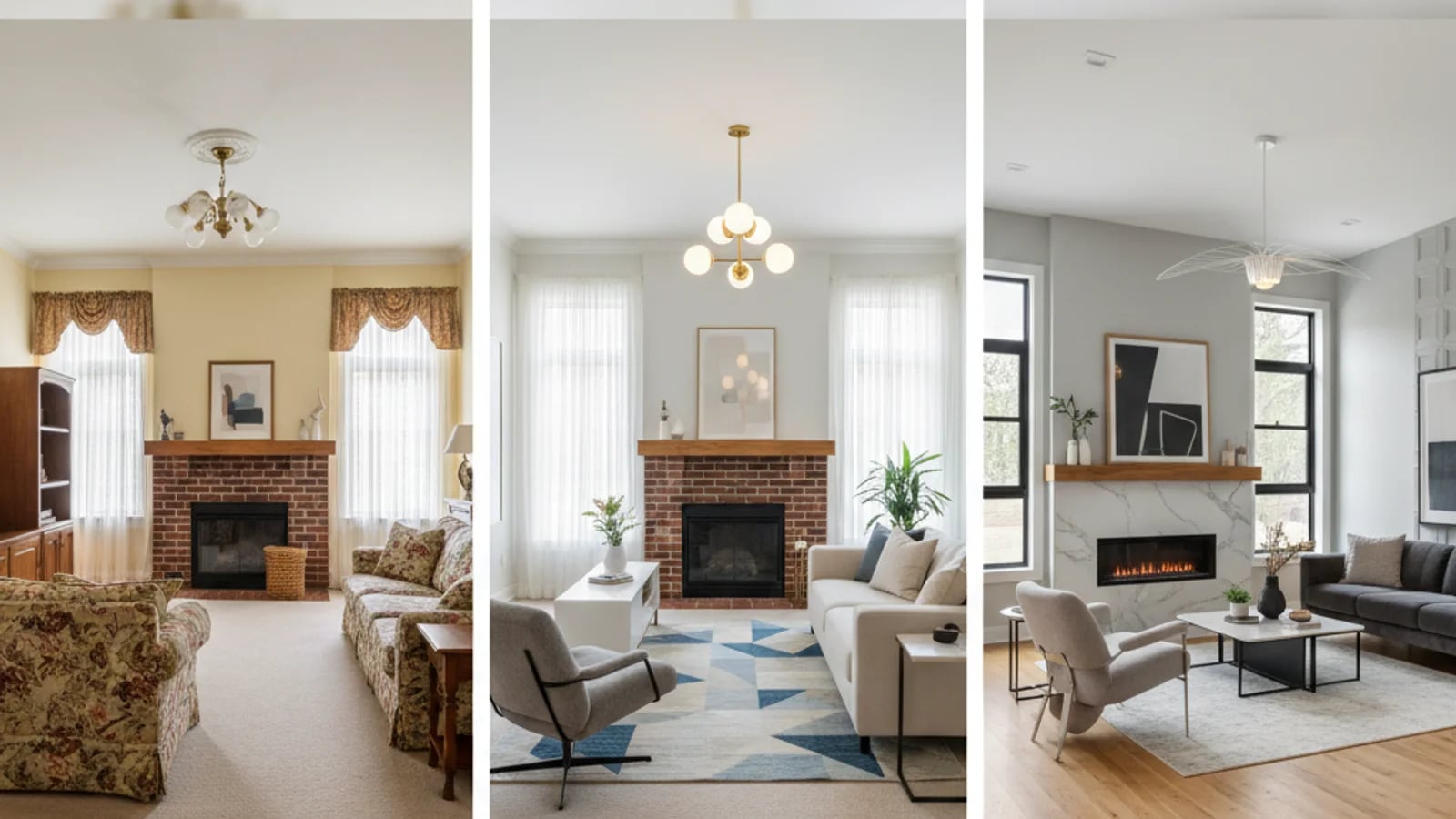
Outdated homes usually fail online for one of two reasons. Either the room feels empty and hard to imagine, or it feels visibly dated and hard to love. Those are not the same problem. Virtual staging solves the first one better. Virtual renovation solves the second one better. Choosing the right approach helps the listing tell a more honest and more useful story.

Use virtual staging when the room works but feels emotionally flat
If the architecture, finishes, and fixed surfaces are still broadly acceptable but the room feels cold, empty, or hard to read, staging is usually the better first move. It gives scale, warmth, and function to a room without implying structural change.
This is especially effective in cleared resale homes, vacant apartments, and listings where the biggest problem is a lack of emotional context rather than a visibly outdated finish package.
Use virtual renovation when dated finishes are the real objection
If the cabinets, flooring, wall treatments, fixtures, or color palette are the main reason the room feels hard to market, virtual renovation is often more honest than staging alone. It helps buyers understand the modernization potential instead of pretending a heavily dated shell becomes attractive with furniture alone.
That is particularly useful for kitchens, bathrooms, and older living rooms where finish language is part of the buying decision.
Sometimes the best sequence is renovation first, staging second
Some outdated homes need both. First modernize the visual finish direction. Then add a restrained staged layer so buyers can read both the upgraded style and the room function. That sequence often works better than furnishing a room whose old finishes still dominate the emotional response.
If the source photo is weak, start with AI photo enhancement so the redesign or staging concept rests on a cleaner base image.
The decision should match the marketing story
Ask what the listing needs the audience to believe. If the message is “this home is move-in ready once you imagine furniture,” use staging. If the message is “this home is a strong opportunity once you update finishes,” use renovation. If both are true, separate those messages clearly rather than blending them into one confusing image.
That distinction also helps when you market the property more broadly through seller decks, landing pages, or outdated-home campaigns.
Sources and further reading
Frequently asked questions
What is the main difference between virtual staging and virtual renovation?+
Virtual staging adds furniture and styling to help buyers understand function and mood. Virtual renovation changes visible finishes or fixtures to help buyers understand modernization potential.
Which is better for an outdated kitchen?+
Virtual renovation is usually stronger because the main objection is often the finishes, not the lack of furniture.
Can agents use both on the same listing?+
Yes, if the home needs both modernization context and room-function context. The key is to keep the story clear and believable rather than overloading one image with too many promises.
Topics covered in this guide
virtual renovation vs virtual staging, outdated home marketing, virtual renovation real estate, virtual staging outdated homes, market old house without renovating.