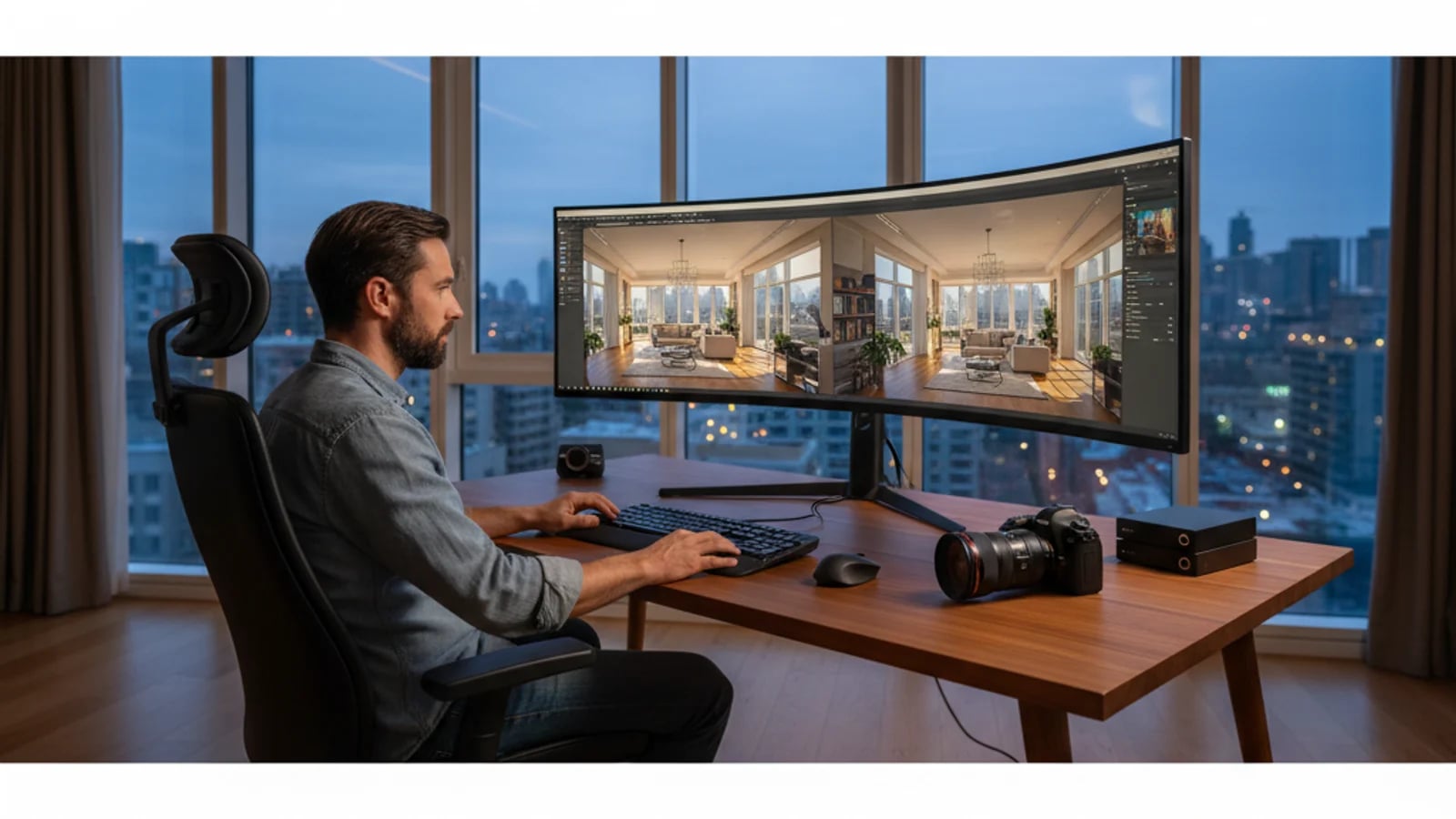
Editing real estate photos well is mostly about restraint. Buyers do not need images that look artistically dramatic. They need images that make the property easier to understand. Good editing brightens, simplifies, aligns, and clarifies. Bad editing exaggerates, hides, or rewrites. That difference matters because listing photography sits in a narrow lane between marketing and representation.

Start with a realistic goal for the image
Before adjusting anything, ask what the photo needs. Most listing images only need one or more of the following:
- exposure correction
- vertical alignment
- colour balance cleanup
- shadow recovery
- mild exterior polish
- selective distraction removal
That is enough to turn many weak source images into publishable listing assets. The mistake is starting from the assumption that every image needs to be made more dramatic. If the room is already appealing, the best edit often feels almost invisible.
Brightness should improve readability, not bleach the room
One of the fastest ways to make real estate photos look fake is over-brightening. Whites become harsh, timber loses depth, and the room starts to feel less like a real space and more like a showroom rendering.
A better target is readability. Open the shadows enough for buyers to understand the room, but leave enough contrast for the image to feel grounded. Kitchens should still have material texture. Bedrooms should still feel dimensional. Exterior walls should still look like their actual finish.
That is the real standard for AI photo enhancement: clearer, cleaner, and brighter without stripping away the physical truth of the space.
Correct perspective before chasing style
Leaning verticals and distorted room lines make even good properties feel lower quality. Perspective correction is one of the most valuable edits in real estate because it helps the property feel intentional and stable without changing what is actually there.
This matters more than flashy grading. A neutral image with straight lines and believable brightness will usually outperform a more stylized image with poor structural cues. Buyers trust geometry quickly. They also notice when a room feels visually off, even if they cannot explain why.
Remove distractions carefully
Real estate photo editing often gets stronger when small distractions disappear: visible cords, countertop clutter, bins or cleaning items, small temporary objects. But removal should serve clarity, not concealment. If the object is incidental and removing it helps the room read better, the edit is usually reasonable. If the object points to a real issue or a meaningful limitation, removing it may cross the line.
That is why digital decluttering works best when paired with a clear rule: remove noise, not truth. When the cleanup is too aggressive, the photo may look cleaner in the moment but weaker in the overall sales process. Furniture removal tools are most valuable when the room is already structurally sound and only visual noise is getting in the way.
Exterior edits should respect the property's real appeal
Exterior images often benefit from cleaner skies, more balanced exposure, and more legible landscaping detail. But the goal should still be credibility. Over-saturated lawns, hyper-blue skies, and exaggerated twilight tones can make a listing look cheaper rather than better.
Use exterior retouching to strengthen curb appeal that already exists. Do not use it to create a fantasy exterior that the property cannot support in person.
Edit with publication trust in mind
The FTC's Advertising and Marketing Basics is broad guidance, but the principle is directly relevant here: advertising should not be deceptive. Listing photography is part of the promise the property makes to the buyer.
That means a safe editing workflow asks: Does this image still represent the real room? Does the edit improve understanding or distort it? Would we be comfortable defending this image if a buyer asked about it? If the answer becomes shaky, the edit probably needs to be reduced.
Strong edits also support stronger pages
Edited photos do not live only inside the listing gallery. They also become the core visual assets for landing pages, blog posts, and search visibility. Google's image SEO best practices are relevant because high-quality images perform best when they are placed near relevant text and used in clear content contexts.
In practical terms, good photo editing supports more than aesthetic quality. It strengthens the entire publishable asset package around the property.
A simple real estate photo editing workflow
If you want a reliable process, use this order:
- choose the strongest source image
- correct perspective
- normalize exposure and colour
- remove small distractions where justified
- polish exterior or detail issues only if needed
- review the final image against the original for realism
This sequence keeps editing grounded in function instead of effect-chasing. The strongest listing image feels clean, calm, and trustworthy. The buyer notices the property first, not the processing.
Sources and further reading
Frequently asked questions
What is the most impactful edit for a typical listing photo?+
Perspective correction followed by exposure normalization. Leaning verticals and dark rooms are the two most common reasons listing photos underperform, and both are fixable without altering the truth of the property.
How do you know when an edit has gone too far?+
When the image stops representing the real room. If the proportions feel off, materials look implausibly clean or new, or the buyer is likely to feel misled on a viewing, the edit needs to be pulled back.
Should every distracting object be removed from listing photos?+
No. Remove incidental noise that blocks readability — cords, bins, temporary clutter. Do not remove objects that point to real property conditions a buyer should know about before visiting.
Topics covered in this guide
how to edit real estate photos, edit real estate photos, real estate photo editing tips, how to make listing photos look better, real estate image editing workflow.