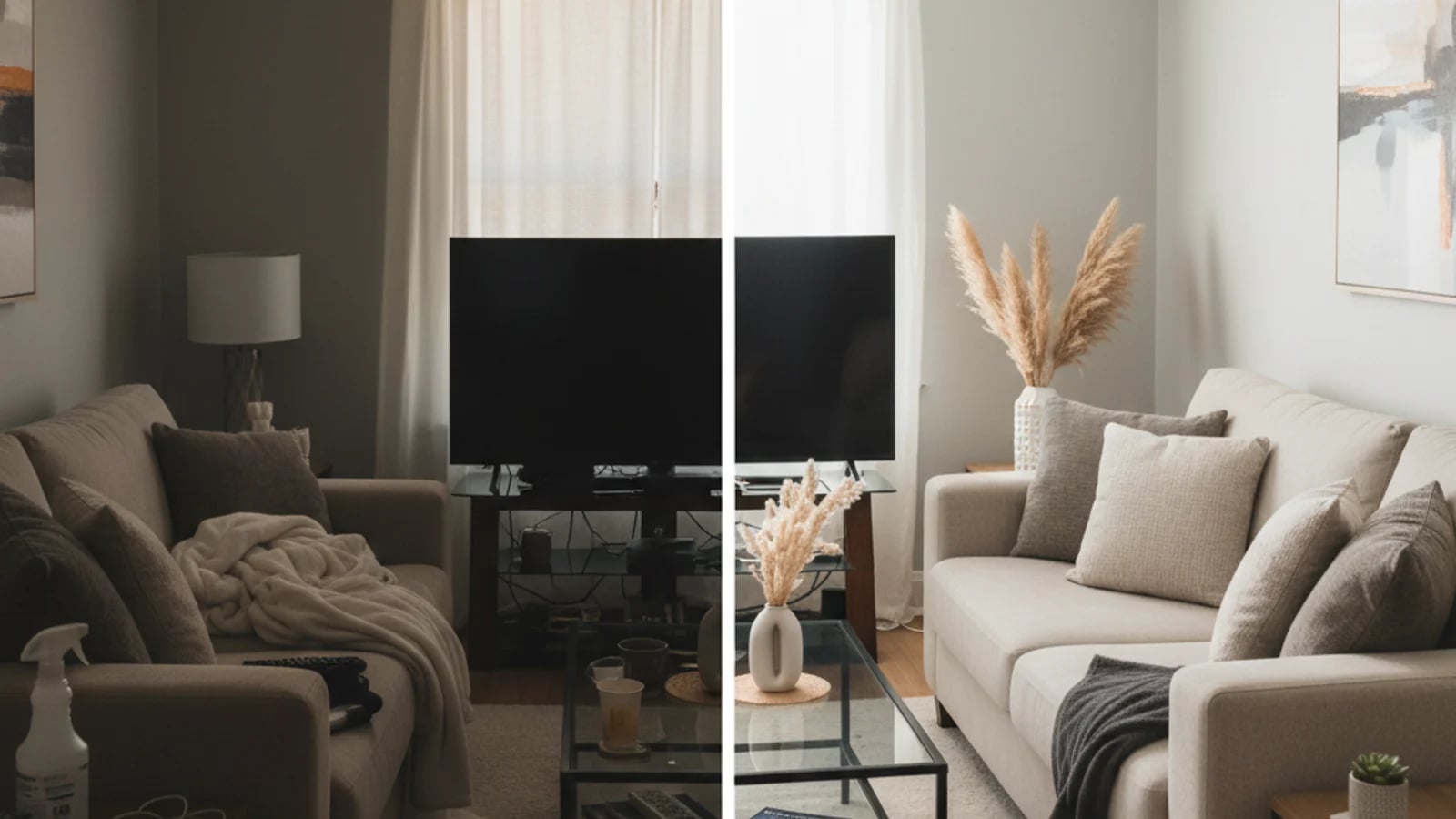
In short-term rental, your cover photo is your storefront. Unlike a property sale where buyers will likely visit before deciding, an Airbnb or Booking.com guest commits — or scrolls past — based almost entirely on a gallery they will never see in person. Both Airbnb and Expedia Group are explicit in their host guidance: clear, well-lit, professionally framed photos are among the strongest predictors of click-through and booking. The challenge for hosts and property managers is keeping that visual quality up to date — across every season, every refurnish, every change of theme — without paying for a full reshoot every time.
Why STR guests book with their eyes first
Guests scrolling a destination city are not reading specs. They are looking for an experience. If the photos are dim, cluttered, or shot under a flat grey sky, the subconscious read is that the stay itself will feel the same way. The Airbnb Pro Photography Program was created on the premise that professional photo quality is one of the highest-leverage interventions a host can make.
Optimizing the gallery is less about beautification and more about removing friction. Running AI photo enhancement across the full set ensures rooms read as bright, clean, and inviting at thumbnail size on a phone — which is where most STR browsing actually happens. The same principle is covered for long-term listings in our guide on optimizing listing photos for more enquiries; STR just compresses the decision window.
Twilight and golden-hour shots stand out in a sea of daytime
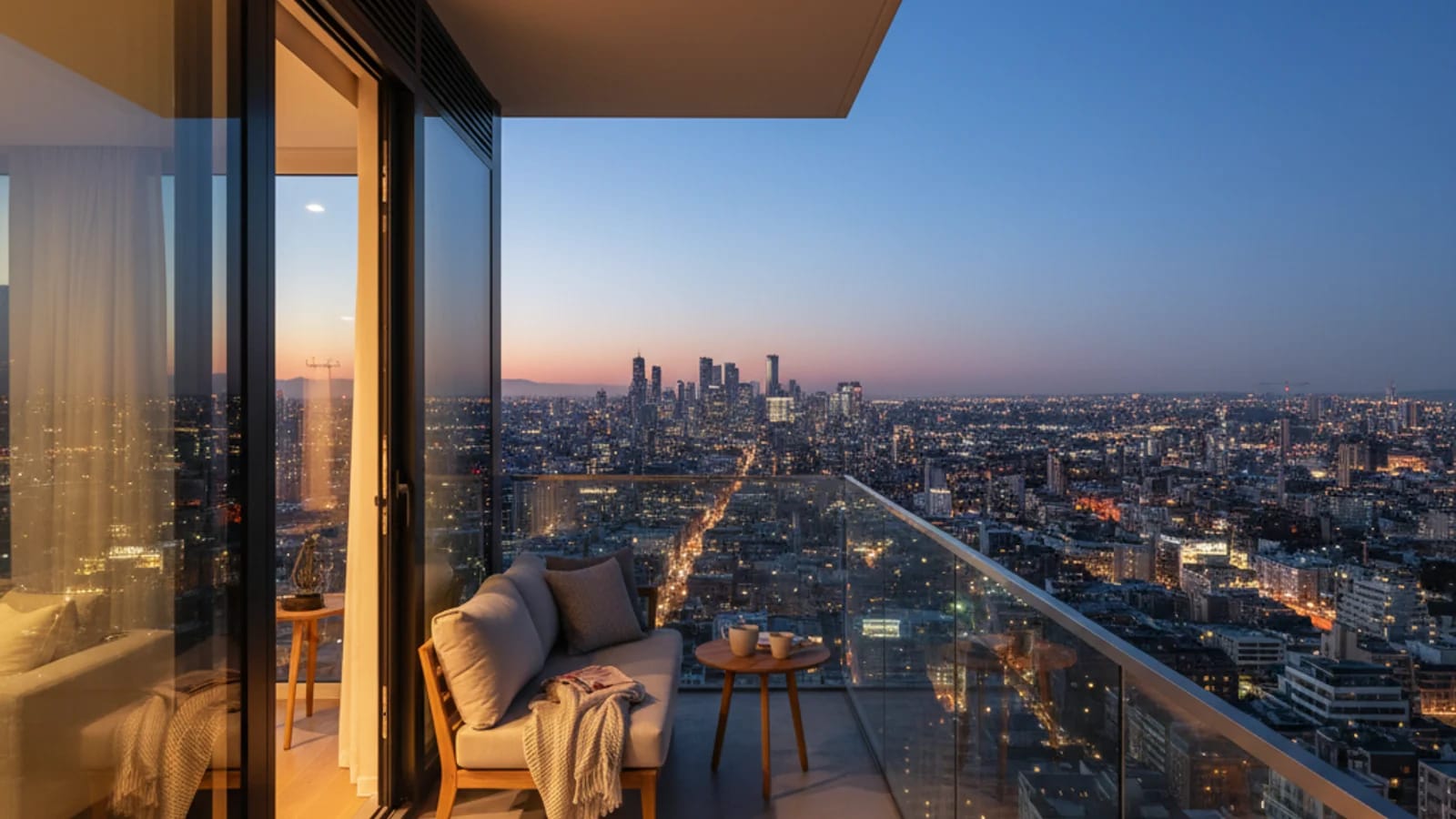
In a crowded marketplace, twilight or golden-hour exterior shots stand out against a default of mid-day daylight. They evoke a quieter, more atmospheric stay — exactly the emotional read that supports a higher nightly rate.
You do not need to wait for the right sunset window to capture them. The same approach we cover in converting daytime photos to twilight shots applies to STR — but use it sparingly. One or two strong twilight frames as gallery openers, with the rest of the gallery in honest daylight, reads as confident. Twilight on every frame reads as dishonest, and STR guests are unusually quick to call that out in reviews.
Decluttering: make the space look guest-ready, not lived-in
One of the most common STR photography mistakes is leaving operational clutter in the frame: cleaning supplies on a counter, stray cables under a TV, a router in the bookshelf, a recycling bin outside the front door. None of these are dishonest about the property — but all of them tell the guest someone else lives here, which is the opposite of the vacation read you want.
AI furniture removal and small-object erasing tools handle this in seconds. Removing a router, a charger cable, or a neighbor's parked car from a curb shot does not change what the property is — it just shows it the way a guest will experience it after the host's reset. Vrbo's photo guidelines emphasize this kind of cleanup as part of high-quality listing prep.
Seasonal updates without a full reshoot
STR listing performance dips when the gallery looks out of season. Snow on the lawn does not sell July. A drought-yellow garden does not sell March. Hiring a photographer for four reshoots a year is rarely worth the cost.
Exterior retouching can refresh seasonal debris, replace dull skies, and clean up landscaping so the listing reads as current to whatever booking window the guest is in. The honest line here is that you are refreshing the presentation, not adding amenities — same garden, photographed for the season it will be booked in.
Add video: a light walkthrough earns the click
Short-form video has shifted travel discovery substantially. Both Instagram and TikTok now function as informal search engines for travelers looking for unique stays — a search behavior that did not exist five years ago.
Once your stills are optimized, video slideshows let you push the same property to social channels with very little extra effort. The technique is the same as a property tour video from photos, tuned for the STR audience: lead with the most vacation-mode frame, keep it under 30 seconds, and let the property's atmosphere do the work.
Booking.com and Vrbo have specific photo rules — follow them
Each major STR portal has its own photo specification. Booking.com's property photo requirements ask for multiple angles per room and explicit bathroom coverage. Vrbo expects each room to be clearly identifiable. Airbnb leans into wide, well-lit shots that read at thumbnail.
A small but real lift comes from re-running your optimized gallery against each portal's checklist before publishing. Missing a bathroom shot on Booking.com can reduce ranking; missing a kitchen shot on Vrbo can reduce trust. AI batch enhancement does not handle gallery completeness for you — but a 5-minute checklist after the AI pass does.
Honest optimization: the line that protects your reviews
In hospitality, "what you see is what you get" is the line between a five-star review and a one-star one. Safe edits include improving lighting and color balance, replacing grey skies with blue ones, removing temporary clutter, and straightening verticals. Edits to avoid include changing wall color in a way that misrepresents the room, hiding permanent structural issues, or adding amenities (a pool, a balcony view, a sea glimpse) that the property does not actually have.
The simplest test: would the guest be surprised — in a bad way — when they walk in? If yes, the edit went too far. STR guests publish their disappointment within hours, and a single misleading photo can tank a listing's rating below the threshold where the portal continues to surface it. Expedia Group's host guidance reinforces this — well-lit, accurate photos drive bookings; misleading ones drive cancellations.
Sources and further reading
Frequently asked questions
Do I really need optimized photos for a small studio?+
Yes — and arguably more than for a large home. Small spaces benefit disproportionately from good lighting and decluttering, because the things that make a studio feel small and cramped (visible clutter, dim corners) are exactly what AI enhancement and digital decluttering remove. The thumbnail of a well-lit 25 m² studio competes with the thumbnail of a 60 m² apartment shot poorly.
How often should I refresh my Airbnb or Booking.com photos?+
A meaningful refresh at least once a year, plus a smaller seasonal update before the high-booking window for your market — May–June for summer destinations, October–November for winter mountain rentals. AI tools make these mini-refreshes cost-effective enough to do without a new photoshoot.
Can I use virtual staging for a new STR that isn't fully furnished yet?+
Yes — this is one of the strongest use cases. Virtual staging lets a new listing start collecting pre-bookings while real furniture is on its way. Disclosure matters here: label the staged frames clearly and replace them with real photos as soon as the property is finished. Misleading guests on a stay they have already paid for is a much worse failure than misleading a property buyer.
What's the single highest-impact photo change for an existing listing?+
Almost always: replacing a dim or overcast cover image with a bright, well-corrected, slightly-warmer-than-neutral version. The cover image determines click-through; nothing else in the gallery matters if the cover doesn't earn the click.
Topics covered in this guide
short-term rental photo optimization, airbnb photo tips, booking.com listing photos, vacation rental photography, vrbo listing photos.